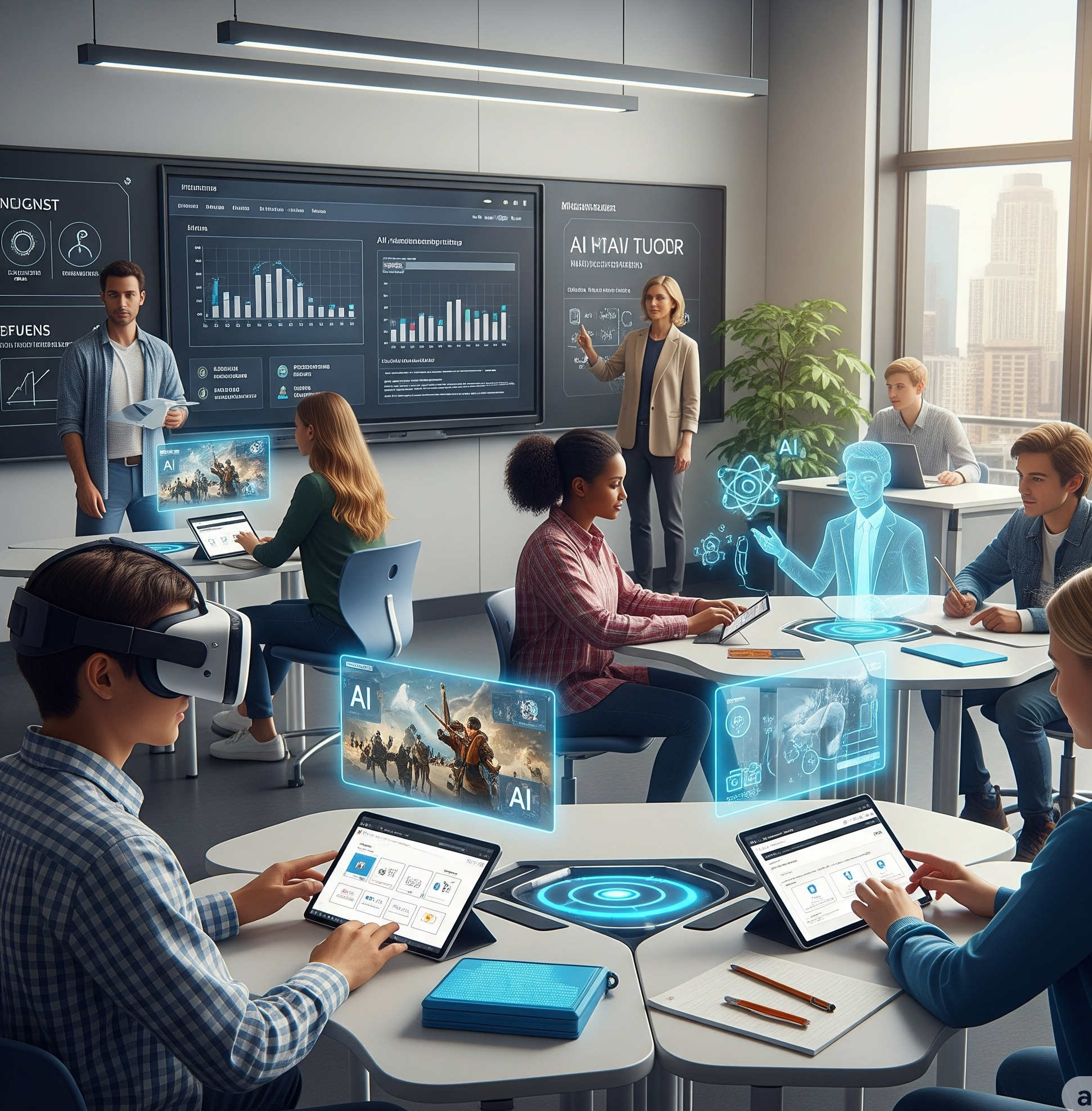
Introduction to AI in Education
Imagine a classroom where every student learns at their own pace, with lessons tailored to their unique needs, and teachers have more time to inspire rather than grade papers. This isn’t a sci-fi dream—it’s the reality Artificial Intelligence (AI) is shaping in education today. From virtual tutors to smart analytics, AI is revolutionizing how we teach and learn, making education more personalized, accessible, and efficient. But with great power comes great responsibility, and AI’s role in education brings both exciting opportunities and ethical challenges.
What Is Artificial Intelligence in Education?
Defining AI in the Educational Context
Artificial Intelligence in education, often called AIEd, refers to the use of intelligent systems that mimic human capabilities like reasoning, learning, and problem-solving to enhance educational processes. Think of it as a super-smart assistant that can analyze student data, adapt lessons, and automate tasks. It’s not about replacing teachers but empowering them to focus on what they do best—connecting with students.
The Evolution of AI in Education
From Chalkboards to AI-Powered Classrooms
Education has come a long way from one-room schoolhouses to digital platforms like Coursera and Khan Academy. AI is the next leap, transforming rigid curricula into dynamic, student-centered experiences. Picture a student struggling with algebra; AI steps in, offering tailored exercises and instant feedback, making learning feel less like a chore and more like a game. This shift is redefining what a classroom can be.
Early AI Applications in Education
AI’s roots in education trace back to early tools like computer-based learning systems in the 1980s. Today, platforms like Duolingo use AI to adapt language lessons, while universities like Arizona State employ AI to personalize curricula. These early wins show AI’s potential to make learning more engaging and effective.
Key Ways AI Is Transforming Education
Personalized Learning: A Game-Changer for Students
One of AI’s biggest gifts to education is personalized learning. Unlike traditional classrooms where one size fits all, AI platforms analyze a student’s strengths, weaknesses, and pace, delivering custom content. For example, Khan Academy’s AI adjusts math problems in real-time, ensuring students stay challenged but not overwhelmed. This approach boosts confidence and keeps learners engaged.
How Personalized Learning Works
AI systems track student performance through data like quiz scores and time spent on tasks. They use this to create tailored learning paths, offering extra practice for struggling areas or advanced material for quick learners. It’s like having a private tutor who never gets tired or impatient.
Benefits of Personalized Learning
- Engagement: Students stay motivated with content matched to their level.
- Efficiency: Learning gaps close faster with targeted exercises.
- Flexibility: Students learn at their own pace, reducing stress.
- Inclusivity: Tailored content supports diverse learning needs, including special education.
Challenges of Personalized Learning
- Cost: Developing AI systems can be expensive for schools.
- Access: Not all students have the tech needed for AI tools.
- Overreliance: Students might depend too much on AI guidance, missing out on critical thinking.
AI as a Teacher’s Ally
Teachers are the heart of education, but they’re often bogged down by paperwork. AI is changing that by automating tasks like grading and lesson planning. Tools like Google Classroom’s AI features can grade multiple-choice tests in seconds, freeing teachers to focus on mentoring students. It’s like giving teachers a superpower to do more of what they love.
Automated Grading and Feedback
AI grading systems don’t just save time; they provide instant feedback. For instance, platforms like Gradescope use AI to score exams and highlight areas where students need improvement. This real-time insight helps teachers intervene before small struggles become big problems.
Virtual Teaching Assistants
AI-powered chatbots, like those used by Georgia Tech, answer student questions 24/7. Whether it’s clarifying a calculus concept or guiding through enrollment, these bots reduce teacher workload while keeping students supported. They’re like tireless TAs who never need coffee breaks.
Enhancing Accessibility and Inclusion
AI is breaking down barriers for students with disabilities or language challenges. Tools like speech-to-text in Microsoft Word help dyslexic students write essays, while real-time translation apps like Google Translate make lessons accessible to non-native speakers. This inclusivity ensures no student is left behind in the AI-powered classroom.
Supporting Diverse Learners
AI can adapt content for students with special needs, such as providing audio descriptions for visually impaired learners or simplified texts for those with cognitive challenges. For example, apps like Immersive Reader adjust reading levels, making learning more equitable.
AI-Powered Analytics for Smarter Education
Data is AI’s secret sauce. By analyzing student performance, AI identifies trends and predicts outcomes. Schools can use this to spot struggling students early or optimize curricula. For instance, Purdue University uses AI analytics to predict dropout risks, allowing timely interventions that keep students on track.
Predictive Analytics in Action
| Use Case | AI Application | Impact |
|---|---|---|
| Dropout Prevention | Predicts at-risk students | Early interventions improve retention |
| Curriculum Optimization | Analyzes topic difficulty | Adjusts teaching methods for better results |
| Resource Allocation | Tracks classroom needs | Ensures equitable distribution of tools |
Real-World Examples of AI in Education
Khan Academy’s Personalized Learning
Khan Academy uses AI to deliver customized math and science lessons. When I was helping my nephew with algebra, we used Khan Academy, and I was amazed at how it adjusted problems based on his progress. He went from dreading math to actually enjoying it, all because the platform made it feel like a personal coach.
Georgia Tech’s AI Teaching Assistant
In 2016, Georgia Tech introduced Jill Watson, an AI-powered teaching assistant for its online master’s program. Jill answered student queries with such accuracy that many didn’t realize she wasn’t human. This innovation allowed professors to focus on deeper student engagement, proving AI’s role as a teacher’s ally.
Duolingo’s Language Learning Revolution
Duolingo’s AI adapts lessons to a user’s proficiency, making language learning fun and effective. My friend Maria, a non-native English speaker, credits Duolingo for helping her ace her TOEFL exam. The app’s ability to tweak lessons based on her mistakes made all the difference.
The Benefits of AI in Education
AI’s impact on education is profound, offering benefits that traditional methods struggle to match. Here’s why it’s a game-changer:
- Efficiency: Automating tasks like grading saves hours for teachers.
- Personalization: Students get tailored content, boosting engagement.
- Accessibility: AI tools support diverse learners, from those with disabilities to non-native speakers.
- Scalability: AI platforms can reach students in remote areas, bridging educational gaps.
- Data-Driven Insights: Schools can make informed decisions with AI analytics.
Challenges and Ethical Considerations
The Digital Divide
Not every school has the budget for AI tools, and not every student has reliable internet. This digital divide risks leaving underserved communities behind. For example, rural schools in my home state struggle with basic Wi-Fi, let alone AI platforms. Bridging this gap is crucial for equitable education.
Data Privacy Concerns
AI thrives on data, but collecting student information raises privacy red flags. A 2023 survey found 60% of educators worry about data breaches in AI systems. Schools must prioritize secure systems and transparent policies to protect students.
Bias in AI Algorithms
AI isn’t perfect—it can inherit biases from its data. For instance, if an AI tool is trained on biased educational content, it might unfairly assess students from underrepresented groups. Regular audits and diverse data sets are essential to ensure fairness.
Overreliance on Technology
There’s a risk that AI could overshadow human interaction. I remember my favorite teacher, Mrs. Thompson, whose encouragement sparked my love for writing. No algorithm can replicate that human touch, which is vital for emotional and social growth.
Comparing AI Tools in Education
| Tool | Purpose | Strengths | Weaknesses |
|---|---|---|---|
| Khan Academy | Personalized learning | Adaptive lessons, free access | Limited to certain subjects |
| Gradescope | Automated grading | Fast, accurate scoring | Requires teacher training |
| Duolingo | Language learning | Engaging, gamified interface | Less effective for advanced learners |
| Google Classroom | Classroom management | Integrates with G Suite | Limited AI features in free version |
The Future of AI in Education
Virtual and Augmented Reality
Imagine students exploring ancient Rome in VR or conducting virtual science experiments. AI-powered VR/AR tools are making learning immersive and interactive. By 2028, South Korea plans to integrate AI-driven digital textbooks with AR, redefining how kids learn.
AI Literacy in Curricula
As AI becomes ubiquitous, schools are teaching students how to use it responsibly. California’s 2024 bill mandating AI literacy in schools is a step toward preparing kids for an AI-driven world. It’s like teaching them to code—essential for future success.
Smart Schools and Hybrid Classrooms
The classroom of 2030 might look like a sci-fi movie, with AI assistants, smart boards, and data-driven lesson plans. Teachers will act as facilitators, guiding students through AI-enhanced learning journeys. This hybrid model blends tech and human connection for the best of both worlds.
People Also Ask (PAA)
How is AI used in education today?
AI is used for personalized learning, automated grading, virtual assistants, and predictive analytics. Tools like Khan Academy and Duolingo adapt content to student needs, while chatbots answer queries and grading systems save teachers time.
What are the benefits of AI in education?
AI boosts efficiency, personalizes learning, enhances accessibility, and provides data-driven insights. It helps students learn at their own pace and supports teachers by automating repetitive tasks.
What are the risks of AI in education?
Risks include data privacy issues, algorithmic bias, the digital divide, and overreliance on tech. Schools must address these through secure systems, equitable access, and a focus on human interaction.
Where can I find AI tools for education?
Platforms like Coursera, Khan Academy, and Google Classroom offer AI-driven tools. For schools, vendors like Pearson and McGraw-Hill provide AI-enhanced curricula. Check their official websites for access.
What are the best AI tools for personalized learning?
Top tools include Khan Academy for math and science, Duolingo for languages, and DreamBox Learning for elementary education. Each offers adaptive learning tailored to individual student needs.
FAQ Section
How does AI personalize learning for students?
AI analyzes student data like quiz scores and learning pace to create custom lessons. For example, platforms like Khan Academy adjust content difficulty in real-time, ensuring students stay engaged and challenged.
Can AI replace teachers in the future?
No, AI can’t replace teachers’ emotional and creative roles. It’s a tool to enhance teaching, automating tasks like grading so teachers can focus on mentoring and inspiring students.
Is AI in education safe for student data?
AI systems must follow strict privacy regulations like GDPR or FERPA. Schools should choose tools with robust security and transparent data policies to protect student information.
How can schools afford AI tools?
Many AI tools, like Khan Academy, are free or low-cost. Schools can also apply for grants or partner with tech companies like Google or Microsoft for discounted access.
What skills do students need in an AI-driven world?
Students need AI literacy, critical thinking, and adaptability. Learning to use AI tools ethically and understanding their limitations will prepare them for future careers.
Conclusion: Embracing the AI-Powered Future
AI is transforming education into a more personalized, inclusive, and efficient system. From tailoring lessons to automating grading, it’s empowering teachers and students alike. But as we embrace this tech, we must address challenges like privacy, bias, and access to ensure no one is left behind. By blending AI’s power with human connection, we can create a future where education inspires every learner to reach their full potential. Ready to explore AI tools for your classroom? Start with free platforms like Khan Academy or check out Google’s AI education initiatives at Google for Education.