Introduction to EdTech in 2025
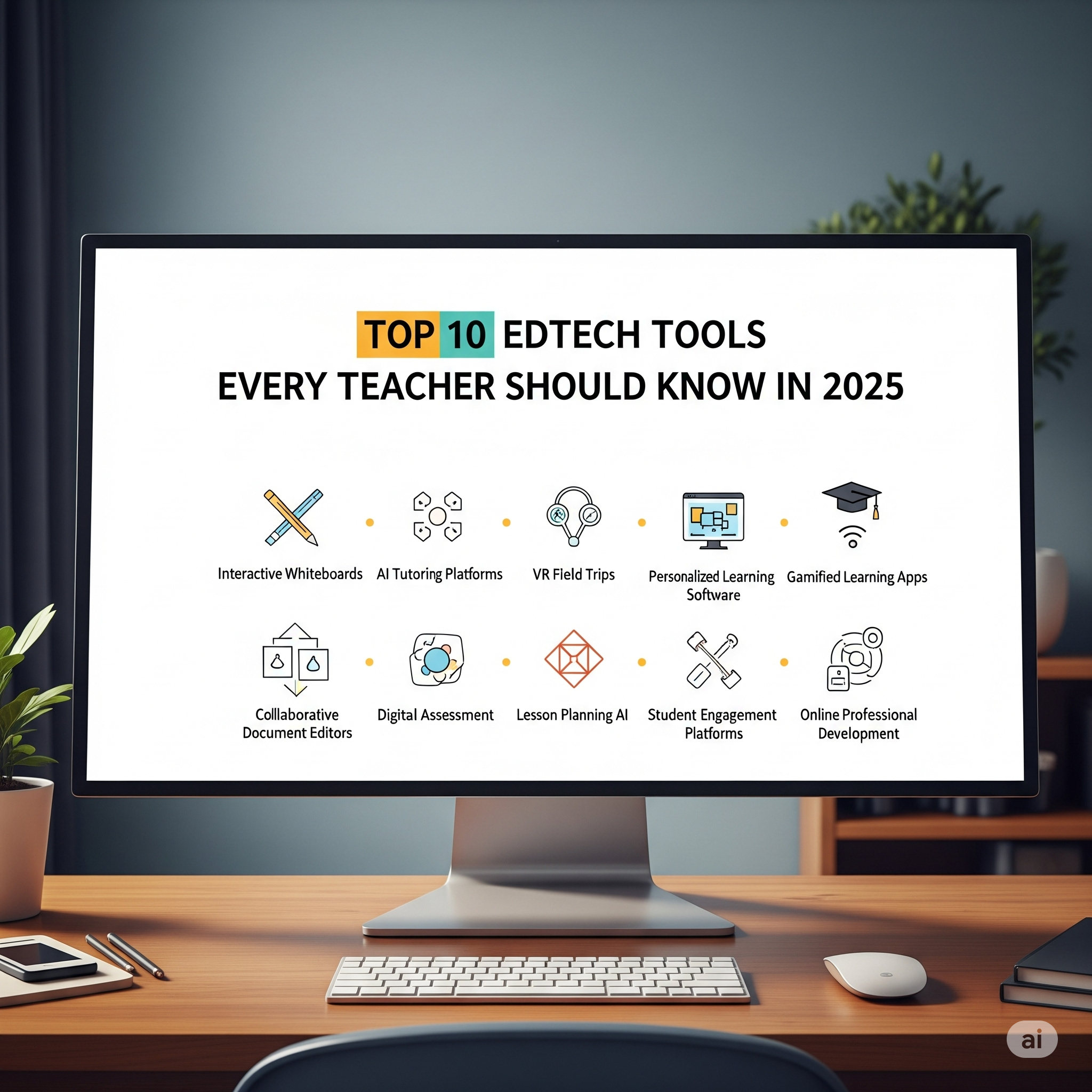
Teaching today feels like juggling flaming torches while riding a unicycle—challenging, but oh so rewarding when you get it right. In 2025, Educational Technology (EdTech) tools are the secret sauce helping teachers balance lesson planning, student engagement, and administrative tasks with ease. From AI-powered assistants to gamified learning platforms, these tools are transforming classrooms into dynamic, inclusive spaces. Let’s dive into the top 10 EdTech tools every teacher should know to make 2025 their most impactful year yet.
What Is EdTech and Why It Matters
Defining EdTech in the Modern Classroom
EdTech, short for Educational Technology, refers to digital tools and platforms that enhance teaching and learning. Think of it as a trusty sidekick, helping teachers personalize lessons, automate grading, and engage students like never before. In 2025, EdTech is all about making education smarter, not harder.
The Rise of EdTech in Education
A New Era of Teaching
Gone are the days of chalkboards and one-size-fits-all lessons. EdTech is reshaping education by offering tools that cater to diverse learning needs and save teachers time. Whether it’s a virtual tutor or a quick quiz app, these tools are making classrooms more interactive and effective.
Why 2025 Is a Game-Changer
The EdTech market is projected to hit $400 billion by 2025, driven by AI, VR, and mobile learning (EdTech Magazine). Teachers are embracing these tools to meet students where they are, whether in a bustling city school or a remote village classroom. It’s an exciting time to teach!
Top 10 EdTech Tools for Teachers in 2025
1. TeachShare: Your Classroom Resource Hub
TeachShare is like a teacher’s dream library, packed with AI-powered, classroom-ready resources. This platform lets educators find, create, and share lessons, quizzes, and activities, all tailored to specific standards. When I needed a last-minute science project for my niece’s class, TeachShare’s customizable templates saved the day.
Why Teachers Love TeachShare
- Offers thousands of customizable resources for all subjects.
- AI tools streamline lesson planning and differentiation.
- Teachers can earn by sharing their own materials.
- Free and premium options fit any budget.
2. TeacherTool.AI: Your AI Co-Pilot
TeacherTool.AI is like having a curriculum coach who never sleeps. It generates assignments, rubrics, and differentiation ideas in seconds, tailored to your students’ needs. A colleague swears it cut her planning time in half, letting her focus on inspiring her students.
Key Features of TeacherTool.AI
- Creates standards-aligned assignments instantly.
- Builds custom rubrics for consistent grading.
- Offers classroom management tips.
- Integrates with Google Classroom for seamless use.
3. WorksheetsAI: Instant Worksheet Wizard
WorksheetsAI is a lifesaver for busy teachers needing quick, differentiated materials. Enter a topic or standard, and it generates printable or digital worksheets with answer keys in seconds. I used it to create math practice for my nephew, and the leveled options kept him engaged without frustration.
Benefits of WorksheetsAI
- Automatically adjusts for different skill levels.
- Aligns with Common Core and other standards.
- Provides print-ready or digital formats.
- Free version offers robust features for small classes.
4. Kahoot!: Gamified Learning Fun
Kahoot! turns dull reviews into lively classroom competitions. This gamified platform lets teachers create quick quizzes that students play in real-time, earning points and bragging rights. My cousin’s middle school class went wild for a history Kahoot!, mastering facts while having a blast.
Why Kahoot! Stands Out
- Engaging quizzes boost student participation.
- Free and premium plans for all budgets.
- Supports hybrid and in-person learning.
- Integrates AR for immersive experiences in 2025.
5. Diffit: Adaptive Content Creator
Diffit makes differentiation a breeze by adjusting articles, videos, or texts to any reading level from 2nd to 11th grade. It also generates summaries, quizzes, and vocabulary lists. A teacher friend used Diffit to adapt a science article for her diverse classroom, saving hours of prep.
Diffit’s Classroom Magic
- Translates content to match student reading levels.
- Creates comprehension checks and vocab lists.
- Exports to Google for easy sharing.
- Free Chrome extension for quick access.
6. SchoolAI: Safe AI Tutors for Students
SchoolAI offers teacher-controlled AI chatbots that answer student questions and provide personalized feedback. Its “Mission Control” dashboard lets teachers monitor interactions, ensuring safety. I saw it in action at a local school, where it helped students brainstorm essay ideas during independent work.
Why SchoolAI Is a Must-Have
- Safe, teacher-monitored AI tutoring.
- Supports critical thinking with tailored prompts.
- Integrates with existing classroom platforms.
- Encourages AI literacy for students.
7. Curipod: Interactive Lesson Builder
Curipod creates student-centered lessons with polls, discussions, and exit tickets in minutes. It’s perfect for engaging shy students who might not speak up in class. A teacher I know used Curipod’s brainstorm spaces to spark lively debates in her ELA class.
Curipod’s Strengths
- Easy-to-use interface for quick lesson creation.
- Encourages participation from all students.
- Supports collaborative learning activities.
- Free for basic features, with affordable upgrades.
8. Notebook LM: Research Made Simple
Powered by Google, Notebook LM summarizes multiple sources like PDFs and websites into study guides, timelines, or audio overviews. It’s ideal for creating student-friendly resources. I used it to compile a history unit for a homeschool group, and the kids loved the clear summaries.
Notebook LM Highlights
- Processes large amounts of content quickly.
- Generates student-friendly materials.
- Supports multimedia inputs like videos.
- Free with a Google account.
9. Mote: Voice Feedback Made Easy
Mote’s Chrome extension lets teachers record voice feedback on student work in Google Classroom or Docs. It’s a personal touch that saves typing time. My sister, a 4th-grade teacher, says her students love hearing her encouraging voice notes.
Why Mote Wins Hearts
- Adds a personal touch to feedback.
- Saves time compared to written comments.
- Works seamlessly with Google tools.
- Free basic plan, with affordable premium options.
10. Flippity: Versatile Activity Creator
Flippity turns Google Sheets into interactive activities like flashcards, BINGO, or crosswords. It’s free and user-friendly, perfect for morning work or early finishers. I created a vocabulary game for my nephew’s class with Flippity, and the kids begged to play more.
Flippity’s Classroom Appeal
- Free and easy to use with Google Sheets.
- Creates diverse activities like quizzes and games.
- Ideal for quick, engaging tasks.
- No advanced tech skills required.
Comparing Top EdTech Tools
| Tool | Best For | Strengths | Weaknesses |
|---|---|---|---|
| TeachShare | Lesson planning, sharing | Customizable, collaborative | Premium features cost extra |
| WorksheetsAI | Differentiated worksheets | Fast, standards-aligned | Limited to worksheet-based tasks |
| Kahoot! | Gamified quizzes | Highly engaging, AR integration | Can be distracting if overused |
| Diffit | Content adaptation | Adjusts reading levels, free extension | Requires internet for full features |
| SchoolAI | Personalized student support | Safe AI tutors, teacher control | Setup may take time |
Benefits of Using EdTech Tools
Saving Time and Boosting Efficiency
EdTech tools like TeacherTool.AI and WorksheetsAI automate repetitive tasks, freeing teachers to focus on instruction. A 2024 survey found teachers save 5–10 hours weekly using automation tools (EdTech Magazine). That’s more time for connecting with students!
Enhancing Student Engagement
Tools like Kahoot! and Curipod make learning fun and interactive, keeping students hooked. Gamification boosts motivation, with studies showing a 14% increase in student participation (Center for Digital Education). It’s like turning class into a game show.
Personalizing Learning
Adaptive tools like Diffit and SchoolAI tailor content to individual needs, supporting diverse learners. This personalization helps students like my neighbor’s son, who has dyslexia, access grade-level content without frustration.
Challenges of Adopting EdTech
The Digital Divide
Not all students have reliable devices or internet, creating access gaps. A 2023 UNESCO report noted 30% of students lack home internet, limiting EdTech’s reach. Schools must provide device loans or Wi-Fi hotspots to bridge this divide.
Data Privacy Concerns
EdTech tools collect student data, raising privacy worries. Platforms like SchoolAI prioritize security with teacher oversight, but schools must ensure compliance with laws like FERPA. Transparent policies are key.
Learning Curve for Teachers
New tools can feel overwhelming. When I tried Flippity, it took a quick tutorial to get the hang of it. Schools should offer training, like LATechNet’s hands-on sessions, to boost teacher confidence.
How to Choose the Right EdTech Tool
Align with Your Goals
Pick tools that match your curriculum and student needs. For example, Diffit is great for reading support, while Kahoot! shines for engagement. Always test tools to ensure they fit your classroom.
Consider Ease of Use
User-friendly tools like Flippity and Mote require minimal setup, saving time. Check for tutorials or support, like MagicSchool’s walkthrough videos, to ease adoption.
Budget and Accessibility
Many tools, like Notebook LM and Flippity, are free, while others offer affordable plans. Schools can explore grants or partnerships with providers like LATechNet for cost-effective solutions.
Real-World Impact of EdTech Tools
A Teacher’s Story
My friend Sarah, a 5th-grade teacher, used TeachShare to find a project-based science unit. Her students built solar ovens, and the hands-on lesson sparked a love for STEM. TeachShare’s resources made it easy to align with standards and engage her class.
Student Success with Kahoot!
A local high school used Kahoot! for biology reviews, turning dry content into lively competitions. Test scores rose by 12%, and students begged for more quizzes. It shows how fun can lead to real learning gains.
The Future of EdTech in 2025
AI and Personalization
AI tools like Khanmigo will expand, offering even smarter tutoring and analytics. By 2026, AI-driven platforms could boost learning outcomes by 30% (Time.com). Teachers will use these insights to tailor instruction like never before.
Immersive Learning with VR/AR
VR and AR, integrated into tools like Kahoot!, will make lessons like virtual field trips mainstream. Imagine students exploring the Great Barrier Reef in class—2025 will make this a reality.
Teacher Empowerment
EdTech isn’t replacing teachers; it’s empowering them. Tools like TeacherTool.AI and Curipod give educators more time for creativity and connection, ensuring the human element stays at the heart of teaching.
People Also Ask (PAA)
What are the best EdTech tools for teachers in 2025?
Top tools include TeachShare, WorksheetsAI, Kahoot!, Diffit, and SchoolAI, offering lesson planning, engagement, and personalization. They save time and boost student outcomes.
How do EdTech tools improve classroom learning?
EdTech tools personalize lessons, automate tasks, and engage students through gamification. They help teachers meet diverse needs and improve retention by up to 20%.
Where can teachers find free EdTech tools?
Free tools like Flippity, Notebook LM, and Kahoot!’s basic plan are available online. Check Google for Education or Khan Academy for more options.
Are EdTech tools safe for student data?
Reputable tools like SchoolAI comply with FERPA and GDPR, offering secure, teacher-monitored platforms. Always review privacy policies before adopting.
How can EdTech tools save teachers time?
Tools like WorksheetsAI and TeacherTool.AI automate grading and planning, saving 5–10 hours weekly. This lets teachers focus on instruction and student support.
FAQ Section
How do EdTech tools support diverse learners?
Tools like Diffit adjust content for different reading levels, while SchoolAI provides personalized tutoring, ensuring students with varied needs succeed.
Can EdTech tools work in low-tech classrooms?
Yes, tools like Flippity use simple platforms like Google Sheets, requiring minimal tech. Offline options like printable WorksheetsAI sheets also help.
Are EdTech tools worth the investment?
Free tools like Kahoot! and Notebook LM offer high value, while premium plans are often affordable. They save time and boost engagement, making them worthwhile.
How do I start using EdTech tools?
Begin with free tools like Flippity or Kahoot!. Watch tutorials on YouTube or check provider websites for guides to ease the transition.
What’s the best EdTech tool for engagement?
Kahoot! excels at engagement with gamified quizzes that turn learning into fun. Its AR features in 2025 make it even more immersive.
Conclusion: Transform Your Classroom in 2025
EdTech tools are revolutionizing teaching, making it easier to engage students, save time, and personalize learning. From TeachShare’s resource hub to Kahoot!’s lively quizzes, these 10 tools are must-haves for 2025. Start small with free options like Flippity or explore premium platforms like TeacherTool.AI to see what fits your classroom. Ready to dive in? Visit EdTech Magazine for more insights and start transforming your teaching today!