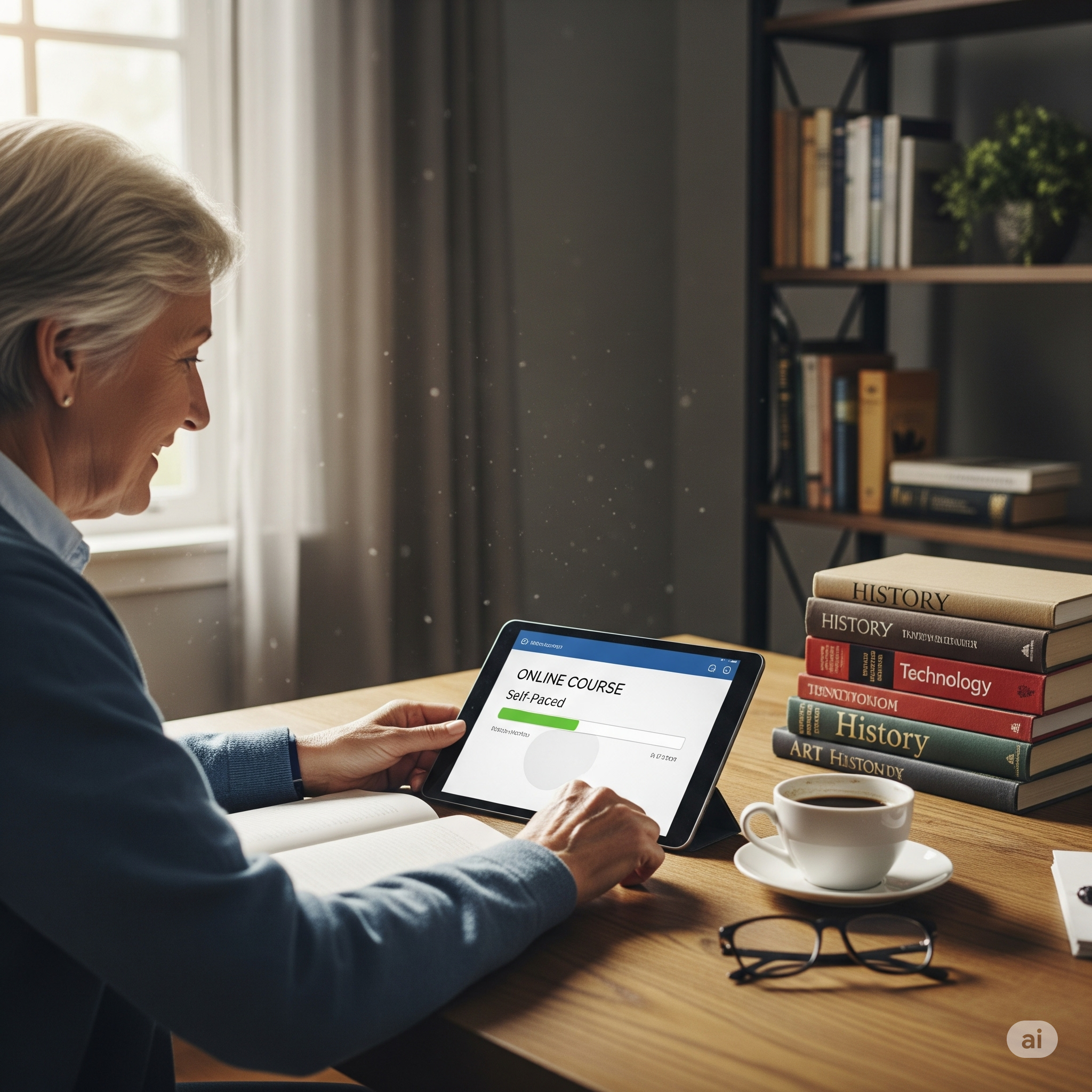
Why Lifelong Learning Matters Now
In 2025, the world moves fast—AI, automation, and shifting job markets demand constant upskilling. Lifelong learning isn’t just a buzzword; it’s a necessity to stay relevant, adaptable, and fulfilled. Self-paced learning, offered by platforms like Coursera and Udemy, empowers individuals to learn on their terms, making education a lifelong habit. This article dives into how self-paced learning fuels continuous growth and transforms lives.
What Is Self-Paced Learning?
Self-paced learning lets you study at your own speed, without rigid deadlines or fixed schedules. Unlike traditional classrooms, platforms like Khan Academy and LinkedIn Learning allow you to pause, rewind, or accelerate as needed. It’s like choosing your own adventure in education, tailored to your life and goals.
The Rise of Self-Paced Learning
The global e-learning market is expected to hit $400 billion by 2025, with self-paced courses leading the charge. Their flexibility suits busy professionals, students, and hobbyists alike. In a world where time is scarce, self-paced learning makes education accessible to all.
Why It’s a Game-Changer
Self-paced learning removes barriers like fixed class times or geographic limits. You can learn coding at midnight or leadership skills during a commute. I started a photography course on Skillshare, studying in short bursts between work—it fit my life perfectly.
Benefits of Self-Paced Learning for Lifelong Education
Flexibility for Any Schedule
Self-paced learning bends to your lifestyle, whether you’re a parent, a 9-to-5 worker, or a digital nomad. Platforms like edX and Udemy let you study when and where it suits you. In 2025, mobile apps make learning seamless on smartphones or tablets.
How Flexibility Empowers
You can tackle a course during lunch breaks or late nights. A colleague balanced a Coursera marketing course with a full-time job, studying 30 minutes daily, and landed a promotion within months.
Personalized Learning Paths
Self-paced platforms use AI to tailor content to your needs. LinkedIn Learning suggests courses based on your career goals, while Pluralsight adjusts for skill levels. This customization ensures you’re learning what matters most to you.
Why Personalization Works
Personalized paths keep you engaged by focusing on relevant skills. I took a data analytics course tailored to my beginner level, which built my confidence and kept me hooked.
Cost-Effective Education
Traditional degrees can cost thousands, but self-paced courses are often free or under $200. Khan Academy offers free lessons, and Udemy’s courses drop to $15 during sales. This affordability makes lifelong learning sustainable.
Budget-Friendly Examples
Coursera’s financial aid and edX’s free audits lower costs. A friend learned web development on Udemy for $20, launching a freelance career without student loans.
Lifelong Skill Development
Self-paced learning supports continuous growth, from coding to creative writing. Platforms like Skillshare and MasterClass offer diverse courses, letting you explore new passions or deepen expertise over time.
How It Fuels Growth
You can pivot from learning Python to UX design as interests evolve. I started with a basic coding course and later explored graphic design, keeping my skills fresh.
How Self-Paced Learning Supports Different Learners
Professionals Seeking Career Growth
Self-paced courses help professionals upskill or pivot careers. Google’s Career Certificates on Coursera or PMI’s project management courses prepare you for promotions or new roles. In 2025, 60% of workers use online learning for career advancement, per LinkedIn.
Why Professionals Benefit
Professionals can study after work, aligning learning with job goals. A coworker mastered data visualization on Pluralsight, securing a raise in six months.
Students Balancing Studies
Students juggling school and part-time jobs find self-paced learning ideal. Platforms like Khan Academy support academic subjects, while edX offers university-level courses. You can study at your own rhythm without clashing schedules.
How Students Thrive
A student I know used Khan Academy to ace calculus while working weekends. The ability to pause and revisit lessons made complex topics manageable.
Retirees and Hobbyists
Self-paced learning isn’t just for careers—it’s for personal growth too. Retirees explore photography on Skillshare or history on MasterClass. It keeps minds active and passions alive, no matter your age.
Why It’s Never Too Late
A retiree friend learned guitar via YouTube tutorials, playing at family gatherings. Self-paced learning lets hobbyists pursue joy without pressure.
Key Platforms for Self-Paced Learning
1. Coursera: Structured Flexibility
Coursera’s university-backed courses, like Yale’s Psychology or Google’s IT Support, offer self-paced certificates. Its AI-driven paths and offline modes make learning accessible in 2025, even with spotty internet.
Why It’s Top-Tier
Coursera blends academic rigor with flexibility, ideal for career-focused learners. Its credentials impress employers, making it a go-to for lifelong learning.
2. Udemy: Affordable Variety
Udemy’s 200,000+ courses cover everything from coding to yoga. Lifetime access and frequent sales make it budget-friendly. In 2025, Udemy Pro adds career coaching for deeper support.
Why It’s Popular
You can explore niche skills like podcasting for $15. I learned SEO on Udemy, applying it to a blog that grew my side income.
3. LinkedIn Learning: Career-Driven
LinkedIn Learning integrates with your profile, showcasing skills to recruiters. Its self-paced courses, like Leadership Essentials, are taught by experts. AI job-matching in 2025 aligns learning with opportunities.
Why It’s a Career Booster
Certificates boost your LinkedIn visibility. A friend transitioned to marketing after a LinkedIn Learning course, landing interviews through the platform.
4. Khan Academy: Free Academic Excellence
Khan Academy offers free, self-paced courses in math, science, and more. Its 2025 Pro version adds personalized tutoring, perfect for students and lifelong learners on a budget.
Why It’s a Lifesaver
Free access levels the playing field. A student I mentored used Khan Academy to master chemistry, boosting her grades without cost.
5. Skillshare: Creative Exploration
Skillshare’s project-based, self-paced courses shine for creative skills like design or writing. Its community-driven approach fosters engagement, with 2025 updates adding portfolio tools.
Why Creatives Love It
Skillshare’s hands-on projects inspire. I created a logo during a course, which sparked a passion for graphic design.
Comparison: Self-Paced vs. Scheduled Learning
| Feature | Self-Paced Learning | Scheduled Learning |
|---|---|---|
| Flexibility | Study anytime, anywhere | Fixed class times |
| Cost | Free–$300/course | $1,000–$50,000/year |
| Pace Control | Fully customizable | Set by instructor |
| Accessibility | Global, mobile-friendly | Limited by location |
| Motivation Required | High (self-discipline) | Moderate (external push) |
Challenges of Self-Paced Learning
Need for Self-Discipline
Without deadlines, procrastination is a risk. Studies show 50% of online learners don’t finish courses. Tools like Todoist and study groups on Reddit help maintain accountability.
How to Stay Disciplined
Set weekly goals and track progress. I used a Google Calendar to schedule coding sessions, turning learning into a habit.
Potential for Isolation
Learning alone can feel lonely without classroom camaraderie. Platforms like Coursera offer forums, but you need to engage actively to feel connected.
How to Build Community
Join Discord groups or Skillshare’s project galleries. I found motivation in a Udemy course’s Facebook group, sharing tips with peers.
Quality Variations
Not all courses are created equal—some lack depth. Research platforms on CourseReport and read G2 reviews to ensure quality.
How to Choose Wisely
Opt for university-backed platforms like edX or employer-endorsed courses like Google’s. User ratings guide smart choices.
Pros and Cons of Self-Paced Learning
- Pros:
- Fits any schedule or lifestyle.
- Affordable or free options.
- Personalized, practical skills.
- Supports lifelong growth.
- Cons:
- Requires strong self-discipline.
- Limited in-person interaction.
- Quality varies across courses.
Personal Story: My Lifelong Learning Journey
A few years ago, I felt stuck in my retail job, craving new skills but strapped for time. I started a self-paced UX design course on Coursera, studying 30 minutes nightly. The flexibility let me learn without quitting my job, and the hands-on projects built my portfolio. Joining a Reddit study group kept me motivated. Within a year, I landed a freelance design gig, proving self-paced learning can spark lifelong growth.
People Also Ask (PAA)
What is self-paced learning?
Self-paced learning lets you study at your own speed, without fixed schedules. Platforms like Udemy and Khan Academy offer flexible courses for lifelong education.
How does self-paced learning support lifelong education?
It provides flexibility, affordability, and personalized skills, letting you learn throughout life. You can upskill, pivot careers, or explore passions at your pace.
What are the best platforms for self-paced learning?
Coursera, Udemy, and Khan Academy excel for self-paced learning. Coursera offers credentials, Udemy is affordable, and Khan Academy is free.
How do I stay motivated in self-paced courses?
Set clear goals, create a routine, and join communities like Reddit or Discord. Reward small wins to maintain momentum.
FAQ Section
Why is self-paced learning ideal for lifelong education?
It offers flexibility, affordability, and tailored skills, fitting any stage of life. You can learn continuously without disrupting work or personal commitments.
Which platforms are best for self-paced learning?
Coursera, Udemy, and LinkedIn Learning are top choices. They offer diverse, self-paced courses with certifications for career and personal growth.
How can I stay disciplined in self-paced learning?
Use tools like Google Calendar or Todoist to schedule study time. Join study groups and set small, achievable goals to stay on track.
Can self-paced learning help with career changes?
Yes, courses like Google’s Career Certificates on Coursera teach job-ready skills. Build a portfolio to showcase your new expertise.
Are self-paced courses as effective as traditional ones?
Yes, when chosen wisely. University-backed platforms like edX ensure quality, and self-paced learning suits those with strong discipline.
Conclusion: Embrace Lifelong Learning with Self-Paced Education
In 2025, self-paced learning is the cornerstone of lifelong education, offering flexibility, affordability, and skills for a fast-changing world. From professionals upskilling on LinkedIn Learning to retirees exploring passions on Skillshare, it empowers everyone to keep growing. My own journey from retail to design showed me its power. Pick a course, set a small goal, and start today—self-paced learning is your key to a lifetime of discovery.